In 2005 Rod Nippert wanted an agricultural hobby that would provide him the exercise and fresh air he felt he needed. Rod had transitioned from years of carpentry into less physical stained glass work. In thinking back to his youth growing up on a farm near Dayton he decided on raspberries. When hearing the story you realize that it was more than his body that Rod had decided to exercise. He started by doing his homework and hasn't stopped since.
On August 25th, nearly 100 people from as far away as New Philadelphia gathered to hear Rod speak on his experiences with organic raspberry production. They observed his clean healthy and ergonomically friendly 800' planting of mostly heritage raspberries. They learned about his successes and struggles and most did there best to avoid popping the tantalizing red fruits into there mouths. Expert technical information was also provided by Maurus Brown Extension Horticulturist from the OSU South Centers in Piketon.
When Rod started his patch he did two things that helped lead to his success. He called Athens County OSU Extension Educator Rory Lewandowski, and he didn't rush. His first growing season was spent on site preparation considered crucial in any horticultural endeavor yet often ignored. He tested the drainage of the site, since raspberries hate “wet feet”, bush hogged, plowed, disked, and manured and then used buckwheat as a fall cover crop. The next season he planted his first 400’ of berries after researching the variety and source of the plants he wanted to grow.
Although not certified organic Rod uses completely organic methods and inputs and the planting is on ground that was long fallow. He fertilizes yearly with well rotted horse manure uses dripline irrigation with careful timing and scouts aggressively for insects and disease. He also selected the variety that he uses with a strong consideration to disease and insect resistance. He developed his methods by extensive reading and consulting with Extension Educators including Shawn Wright and Maurus Brown of OSU South Centers in Piketon. The internet has also been a big source of information for Rod. This winter he plans to top dress his rows with gypsum to increase the level of calcium in his soil in an effort to control the fungal disease Phytophora which is one of the major threats to raspberries. Rod learned about this relatively new method of control through computer links to Cornell University in New York.
With the economic downturn reducing the call for stained glass Rod now looks to his raspberry planting named “Bodacious Berries” as an income source. He added another 400’ of heritage plants this year. His berries are marketed through word of mouth and sell for $7 dollars a quart. Rod delivers to businesses and residences and has been known to put the berries right into your refrigerator! Demand remains high and Rod currently sells all he can grow. He pays as close attention to the economic side of the berries as he does to the horticulture. Rod keeps a meticulous log of his time, expenses, and inputs. He is currently netting an eye opening $14 an hour for his efforts.
For more information on raspberry production, and small fruit production in general contact your county OSU Extension Educator or the South Centers in Piketon at 740-289-2071.
Thursday, August 27, 2009

Wednesday, August 5, 2009
Sustainable Ag Gurus Present 50 Year Farm Bill to the White House
 Heros of the Sustainable Agriculture movement, Wes Jackson, Wendell Berry and Fred Kirschenmann, recently traveled to Washington to propose a 50 year Farm Bill which would transform American farming. The three met with Kathleen Merrigan, deputy secretary of agriculture, and several members of the Kansas congressional delegation to discuss their plan, which details the importance of perennial crops to reduce soil erosion, increase drought resistance and reduce energy use. The plan calls for $50 million a year to fund research that would help make possible, the transition from annual to perennial crops. The presentation included a giant photographic banner showing the immense, nearly 20 feet long root systems of perennials grasses.
The group emphasized that a system that values not only yields but local ecosystems, healthy food and rural communities, was the way to revolutionize American agriculture. Fred Kirschenmann, a fellow at the Leopold Center, expressed concern in a universal solution to hunger that involves industrial agriculture and genetically modified crops and stressed the importance of appropriate technologies.
Wes Jackson described the reception as positive.
"They were all impressed by the roots," he said. "I just handed them the farm bill. I didn't get what you would call a solid commitment." During their stay, the team toured the White House and its gardens and Jackson left two sacks of The Land Institute's perennial Kernza wheat flour with the White House chef.
Members of Rural Action and the community were fortunate to have the founder of The Land Institute and acclaimed author Wes Jackson present on his work with perennial grains at this year’s Annual Meeting. He had his impressive photos of perennial root systems on display for us as well as a detailed presentation of his work in Salinas, Kansas. More information about the Land Institute’s work can be found at their website: www.landinstitute.org
Click here to read a full copy of the 50 Year Farm Bill presented by the trio.
Monday, July 20, 2009
Weeds, Beans, and Tubers, Oh My!
A few Tuesdays ago, I spent the entire day outside on in the gorgeous weather that we had, surrounded by some of the most picturesque rural Appalachian hilltop vistas and gorgeous agrarian scenery one could imagine…. staring at a bunch of weeds. It’s true, and I had absolutely no problem doing it. The clouds were majestic, the grass was green, the air was warm with a nice cool breeze, and I was sitting in the dirt searching for bush beans and potato plants amidst a sea of weeds.
Don’t get the wrong impression - I had an awesome day weeding. There’s nothing to stop one from looking up to admire the scenery every now and again while weeding, or feeling a nice breeze whisk the sweat off one’s back. On top of that, there’s just something very rewarding about looking back at a nice tidily planted row of beans or potatoes, knowing that less than an hour ago it looked like nothing so much as a field of weeds that would choke out any possibility of growing food for the year.
Amidst all the nice weather and beautiful views was my grandpa Tom, sitting across from me doing more or less the same thing as I was (though I’m sure he did it better, having done it his entire life). My grandpa raises cattle, but he also plants a rather large garden every year, and I was helping him out for the day. I spent all morning and afternoon weeding the crops while he went back and forth between cutting hay with the neighbor and joining me in the garden. Aspiring to become a farmer myself, it wasn’t long before he and I got to talking about what he was growing this year. The row of beans I first weeded turned out to be “Blue Lake” green beans, a delicious stringless variety that Grandpa recommends best for canning. Among many other green bean varieties he’s planted throughout the years, each with their own benefits and shortcomings depending on the growing conditions and what you’re looking to get out of the crop, his next all-around favorite was “Top Crop” which he told me has consistently given him the biggest and longest-lasting harvest of green beans he’s ever had. There are lots of different varieties of green beans out there. I recommend trying them out to see what kinds of beans you think work best for you and your garden (and your taste buds!).
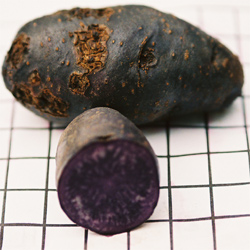
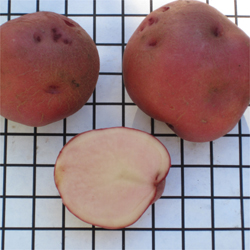
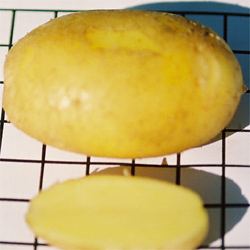
Having been raised on potatoes as a child, and loving them in all the multitude of ways they could be prepared and eaten, you’ll have to forgive me if I go too in-depth with the next crop, but I will. Potatoes have been a favorite of mine for a long while, and only recently had I learned about all the different colors they come in. That’s right, colors! The skins can range from deep bright red to dark purple to yellows to whites and browns, and the flesh is much the same but even brighter. Just take a look at a “Purple Peruvian” fingerling sliced in half, or the earthy mottled-red look of a plump “Huckleberry” potato. Though I haven’t yet tried one (I’m growing them this year), the bright golden-yellow inside of a “German Butterball” looks so tasty I’m tempted to be impatient and dig one up right now. My grandpa wasn’t very familiar with any of these more exotic-sounding varieties, but he did have a particular favorite that actually I hadn’t ever heard of until we talked about them earlier this year. It’s an old but fairly reliable variety of white potato called the “Irish Cobbler.” Grandpa used to plant several hundred pounds of them every year as a child, and was quite fond of them. The potatoes sold in supermarkets anymore are probably all guaranteed to be the one of the standard white potato varieties “Idaho” and “Kennebec,” which both he and I agree are a little too mealy for our tastes. On top of that, most people aren’t aware of how much of a potato’s nutrition lies in the skin, which is generally a bad idea to eat when dealing with “conventionally-grown” potatoes, meaning they’re grown with excessive amounts of chemical fertilizers, pesticides, and who knows what else. All of those chemicals are absorbed right into the soil where – you guessed it – the potatoes are growing, and soaking up all of that grossness right into their skins. Some pesticides now banned by the United States government can still persist in soils today from when they were first outlawed decades ago!
These varieties are just a small sample of the thousands of heirloom potato varieties that were bred and grown by the ancient Native American cultures of the Andes Mountains, where potatoes were first domesticated. Many of the ancient Andean varieties have since been lost to civilization, but many still survive today, and have become increasingly easier to find and grow through the revolution of the internet, along with heirloom variety preserving organizations such as Seed Savers Exchange and others.
Not only are there lots of heirloom varieties out there to experiment with growing, but you can also breed your own NEW varieties of potatoes (and just about any other vegetable for that matter) with their own new sets of characteristics, flavors, resistances, etc. Even though the potatoes we eat are tubers (a type of modified underground stem for storing nutrients), potato plants flower and produce fruit just like all other angiosperms (flowering plants).
Though the potato fruits might look just like miniature tomatoes (which happen to be a close relative of potatoes), potato fruits are extremely toxic and should never, under any circumstances, be eaten.
After a potato has bloomed and been pollinated, a fruit will begin to grow where each flower was. Once these fruits feel tender and ripe like a tomato would when it is ready to be picked, pick them and toss them in a blender with some water for just long enough to get the seeds separated from the rest of the fruit. If you let this mixture sit still for a day in a bit more water, the potato seeds should sink to the bottom while the rest of the fruit matter floats to the top. After separating the seeds and washing them a few times, you will have clean potato seeds. Let these dry on a paper towel and then store them in an airtight container for planting in future years. They should keep for several years.
That’s basically all you need to start growing your very own new varieties of potatoes. Each of those seeds in the potato fruit is genetically unique from any other potato, and from any other seed (even from the same fruit!). With selective harvesting and continued breeding of the most successful (or tasty, disease-resistant, drought-tolerant, huge, etc.) plants, you can successfully breed your very own new and improved potato varieties that have all the qualities you want them to. When you do find that potato that seems to be just the one you’re looking for, you can save some of the tubers from that one to plant next year and grow more and more of that favorite spud. Check out this link for a more in-depth description of how to breed potatoes.
While this description of “vegetable husbandry” was specifically geared towards potatoes, the same general principles apply to many other crops as well. Selective breeding is exactly how we’ve acquired such a vast array of delicious varieties of crops to choose from. Don’t think you need a PhD in crop science and a nice white lab coat to breed new vegetable varieties. Everyday farmers and gardeners have traditionally done it since humans first domesticated plants over 12,000 years ago. Have at it!
Don’t get the wrong impression - I had an awesome day weeding. There’s nothing to stop one from looking up to admire the scenery every now and again while weeding, or feeling a nice breeze whisk the sweat off one’s back. On top of that, there’s just something very rewarding about looking back at a nice tidily planted row of beans or potatoes, knowing that less than an hour ago it looked like nothing so much as a field of weeds that would choke out any possibility of growing food for the year.
Amidst all the nice weather and beautiful views was my grandpa Tom, sitting across from me doing more or less the same thing as I was (though I’m sure he did it better, having done it his entire life). My grandpa raises cattle, but he also plants a rather large garden every year, and I was helping him out for the day. I spent all morning and afternoon weeding the crops while he went back and forth between cutting hay with the neighbor and joining me in the garden. Aspiring to become a farmer myself, it wasn’t long before he and I got to talking about what he was growing this year. The row of beans I first weeded turned out to be “Blue Lake” green beans, a delicious stringless variety that Grandpa recommends best for canning. Among many other green bean varieties he’s planted throughout the years, each with their own benefits and shortcomings depending on the growing conditions and what you’re looking to get out of the crop, his next all-around favorite was “Top Crop” which he told me has consistently given him the biggest and longest-lasting harvest of green beans he’s ever had. There are lots of different varieties of green beans out there. I recommend trying them out to see what kinds of beans you think work best for you and your garden (and your taste buds!).
Having been raised on potatoes as a child, and loving them in all the multitude of ways they could be prepared and eaten, you’ll have to forgive me if I go too in-depth with the next crop, but I will. Potatoes have been a favorite of mine for a long while, and only recently had I learned about all the different colors they come in. That’s right, colors! The skins can range from deep bright red to dark purple to yellows to whites and browns, and the flesh is much the same but even brighter. Just take a look at a “Purple Peruvian” fingerling sliced in half, or the earthy mottled-red look of a plump “Huckleberry” potato. Though I haven’t yet tried one (I’m growing them this year), the bright golden-yellow inside of a “German Butterball” looks so tasty I’m tempted to be impatient and dig one up right now. My grandpa wasn’t very familiar with any of these more exotic-sounding varieties, but he did have a particular favorite that actually I hadn’t ever heard of until we talked about them earlier this year. It’s an old but fairly reliable variety of white potato called the “Irish Cobbler.” Grandpa used to plant several hundred pounds of them every year as a child, and was quite fond of them. The potatoes sold in supermarkets anymore are probably all guaranteed to be the one of the standard white potato varieties “Idaho” and “Kennebec,” which both he and I agree are a little too mealy for our tastes. On top of that, most people aren’t aware of how much of a potato’s nutrition lies in the skin, which is generally a bad idea to eat when dealing with “conventionally-grown” potatoes, meaning they’re grown with excessive amounts of chemical fertilizers, pesticides, and who knows what else. All of those chemicals are absorbed right into the soil where – you guessed it – the potatoes are growing, and soaking up all of that grossness right into their skins. Some pesticides now banned by the United States government can still persist in soils today from when they were first outlawed decades ago!
These varieties are just a small sample of the thousands of heirloom potato varieties that were bred and grown by the ancient Native American cultures of the Andes Mountains, where potatoes were first domesticated. Many of the ancient Andean varieties have since been lost to civilization, but many still survive today, and have become increasingly easier to find and grow through the revolution of the internet, along with heirloom variety preserving organizations such as Seed Savers Exchange and others.
Not only are there lots of heirloom varieties out there to experiment with growing, but you can also breed your own NEW varieties of potatoes (and just about any other vegetable for that matter) with their own new sets of characteristics, flavors, resistances, etc. Even though the potatoes we eat are tubers (a type of modified underground stem for storing nutrients), potato plants flower and produce fruit just like all other angiosperms (flowering plants).
Though the potato fruits might look just like miniature tomatoes (which happen to be a close relative of potatoes), potato fruits are extremely toxic and should never, under any circumstances, be eaten.
After a potato has bloomed and been pollinated, a fruit will begin to grow where each flower was. Once these fruits feel tender and ripe like a tomato would when it is ready to be picked, pick them and toss them in a blender with some water for just long enough to get the seeds separated from the rest of the fruit. If you let this mixture sit still for a day in a bit more water, the potato seeds should sink to the bottom while the rest of the fruit matter floats to the top. After separating the seeds and washing them a few times, you will have clean potato seeds. Let these dry on a paper towel and then store them in an airtight container for planting in future years. They should keep for several years.
That’s basically all you need to start growing your very own new varieties of potatoes. Each of those seeds in the potato fruit is genetically unique from any other potato, and from any other seed (even from the same fruit!). With selective harvesting and continued breeding of the most successful (or tasty, disease-resistant, drought-tolerant, huge, etc.) plants, you can successfully breed your very own new and improved potato varieties that have all the qualities you want them to. When you do find that potato that seems to be just the one you’re looking for, you can save some of the tubers from that one to plant next year and grow more and more of that favorite spud. Check out this link for a more in-depth description of how to breed potatoes.
While this description of “vegetable husbandry” was specifically geared towards potatoes, the same general principles apply to many other crops as well. Selective breeding is exactly how we’ve acquired such a vast array of delicious varieties of crops to choose from. Don’t think you need a PhD in crop science and a nice white lab coat to breed new vegetable varieties. Everyday farmers and gardeners have traditionally done it since humans first domesticated plants over 12,000 years ago. Have at it!
Tuesday, June 23, 2009
Trillium Spring Newsletter: Locavores, CSA, more!
Below is a link to the Trillium spring newsletter, featuring a brief review of Barbara Kingsolver's book Animal, Vegetable, Miracle: A Year of Food Life, as well as articles about community supported agriculture (CSA), what it means to be a "locavore," and other useful information.
Check it out here!
http://www.trilliumohio.com/WRSummer2009Newsletter.html
Check it out here!
http://www.trilliumohio.com/WRSummer2009Newsletter.html
Friday, June 19, 2009
Wild Edible Plants Walk
The Monday Creek Watershed Daycamp this past week was a great success. As a special presentation, I took the campers on a walk around Tecumseh Lake to teach them about wild edible plants. To be honest, I was quite surprised at how attentive they all were throughout the whole presentation. Also, the kids were surprised as well to see how many different plants there were all around them that were edible. When you think about it though, it doesn’t seem that far-fetched. Afterall every plant that we’ve ever domesticated was once just a wild edible like these.
We began our walk on the east side of the lake and continued around to the west side, stopping to talk about every wild edible plant that we found on the way. In fact, we found so many wild edibles just on the walk around the lake that we didn’t even manage to get into the woods to look at more wild edibles in the forest before we ran out of time!
Simply standing in the mowed grassy area around Tecumseh lake, we found several wild edibles right beneath our feet (though we didn’t try any of course, since they were stepped on and goose droppings were all around). Species we found here included red, white, and hop clovers, wood sorrel (aka “sourgrass”), greater and lance-leaf plantain (not to be confused with the tropical banana-like fruit), dandelions, and wild carrot.
We also found many other species among the brush just past the mowed areas. Flowers such as ox-eye daisy, honeysuckle vines (an unfriendly invasive species, unfortunately), and yellow sweet clover were quite common in these areas. Another flower common to this habitat (which is one of my personal favorites) is yarrow, a strong-flavored flower with many valuable medicinal uses. I like to chew on it to help relieve a sore throat. Of these, honeysuckle was by far the children’s favorite. Most of them already knew how to pick off flowers and pull the stigma out the bottom to get a delicious drop of nectar, but were surprised to hear that the whole flower was edible, making it a great edible decoration for many dishes. It should be noted that while the flower is edible, honeysuckle berries are mildly poisonous and should not be eaten.
Some of the woodier species of edibles we found included wild grapevines, blackberries, black raspberries, sumac, sassafras trees, white pine, and white oak. Another easily-identifiable favorite of the kids were the cattails we found in some of the more damp areas around the lake. Cattails are an especially good wild edible to know because when they grow, they tend to grow in large groups. This coupled with the fact that almost all parts of the plant are nutrient-rich and can be eaten at one point or another in its development makes cattail an excellent survival food.
With only a limited amount of time, we weren’t able to go much further and explore the wild edibles of the forest. Ironically, we had to stop for lunch. After a quick glance though, here’s a small sample list of what tasty treats I saw in the woods: American hazelnut, spicebush, stinging nettle, wood nettle, hog peanut, wild violets, mayapple, wild ginger, greenbrier, pawpaw, hickory, and more!
Click on each of the edible species listed in this article to find out how it can be prepared and eaten.
We began our walk on the east side of the lake and continued around to the west side, stopping to talk about every wild edible plant that we found on the way. In fact, we found so many wild edibles just on the walk around the lake that we didn’t even manage to get into the woods to look at more wild edibles in the forest before we ran out of time!
Simply standing in the mowed grassy area around Tecumseh lake, we found several wild edibles right beneath our feet (though we didn’t try any of course, since they were stepped on and goose droppings were all around). Species we found here included red, white, and hop clovers, wood sorrel (aka “sourgrass”), greater and lance-leaf plantain (not to be confused with the tropical banana-like fruit), dandelions, and wild carrot.
We also found many other species among the brush just past the mowed areas. Flowers such as ox-eye daisy, honeysuckle vines (an unfriendly invasive species, unfortunately), and yellow sweet clover were quite common in these areas. Another flower common to this habitat (which is one of my personal favorites) is yarrow, a strong-flavored flower with many valuable medicinal uses. I like to chew on it to help relieve a sore throat. Of these, honeysuckle was by far the children’s favorite. Most of them already knew how to pick off flowers and pull the stigma out the bottom to get a delicious drop of nectar, but were surprised to hear that the whole flower was edible, making it a great edible decoration for many dishes. It should be noted that while the flower is edible, honeysuckle berries are mildly poisonous and should not be eaten.
Some of the woodier species of edibles we found included wild grapevines, blackberries, black raspberries, sumac, sassafras trees, white pine, and white oak. Another easily-identifiable favorite of the kids were the cattails we found in some of the more damp areas around the lake. Cattails are an especially good wild edible to know because when they grow, they tend to grow in large groups. This coupled with the fact that almost all parts of the plant are nutrient-rich and can be eaten at one point or another in its development makes cattail an excellent survival food.
With only a limited amount of time, we weren’t able to go much further and explore the wild edibles of the forest. Ironically, we had to stop for lunch. After a quick glance though, here’s a small sample list of what tasty treats I saw in the woods: American hazelnut, spicebush, stinging nettle, wood nettle, hog peanut, wild violets, mayapple, wild ginger, greenbrier, pawpaw, hickory, and more!
Click on each of the edible species listed in this article to find out how it can be prepared and eaten.
Tuesday, June 16, 2009
2009 Ohio Farm Tour Series
The 2009 Ohio Sustainable Farm Tour Series is set to start June 20th. This yearly opportunity to get a view of some of the best that Ohio Agriculture has to offer is sponsored by Innovative Farmers of Ohio, Ohio Ecological Food and Farm Association, Ohio Forage and Grasslands Council, Ohio State University Organic Food and Farming Education and Research Program, O.S.U. Sustainable Agriculture Team, and the USDA SARE Program.
As always this years tour series features a wide range of agricultural operations from an organic vineyard, to organic field crops, to direct marketed hogs and poultry, to sustainable forestry practices. For a complete list of the 2009 tours see the 2009 Ohio Sustainable Farm Tours Brochure.
This years farm tours will feature two Athens County farms. Both stalwarts of the Southeast Ohio Sustainable Agricultural movement.
On Saturday July 18th, Kip and Becky Rondy of Green Edge Organic Gardens near Amesville will host a tour of their 120 acre organic vegetable operation. This is an opportunity to see one of the premier organic farms in our region. Kip and Becky have successfully utilized the natural assets of their property to produce 30 organic specialty crops, including mushrooms. This is a year round business that utilizes five greenhouses, as well as production fields. Green Edge markets its produce through a CSA, natural food stores and restaurants in Athens and Columbus, and at the Athens Farmers Market.
Green Edge tour participants are encouraged to start the day off with a visit to the Athens Farmers Market, known by many as the best farmers in Ohio, and one of the best in the Country. The market runs from 10:00am to 1:00 pm, featuring a wide variety of local food, entertainment, and good old fashioned community interaction. Anyone interested in taking the opportunity to spend the weekend in the area should check out the Athens County Convention and Visitors Bureau, for a list of lodging and area events.
J.B. and Charlene King of Albany will open the doors to King Family Farm on Sunday September 20th. J.B. and Charlene have a life time of farming experience to share. They produce superior quality hogs and poultry on their 200 acre Athens County farm. They market their products throughout Southeastern, and Central Ohio.
The Kings have developed systems for reducing animal stress, and growing and mixing their own feeds, that result in some of the best pork and chicken you will ever taste. King Family Farm products are also available at the Athens Farmers Market.
This years Farm Tour series offers something for everyone interested in farming or consuming quality food, while conserving our environment. Check out the tour opportunities on-line, and contact info@ohiofoodshed.org or any of the sponsoring organizations if you have any questions.
As always this years tour series features a wide range of agricultural operations from an organic vineyard, to organic field crops, to direct marketed hogs and poultry, to sustainable forestry practices. For a complete list of the 2009 tours see the 2009 Ohio Sustainable Farm Tours Brochure.
This years farm tours will feature two Athens County farms. Both stalwarts of the Southeast Ohio Sustainable Agricultural movement.
On Saturday July 18th, Kip and Becky Rondy of Green Edge Organic Gardens near Amesville will host a tour of their 120 acre organic vegetable operation. This is an opportunity to see one of the premier organic farms in our region. Kip and Becky have successfully utilized the natural assets of their property to produce 30 organic specialty crops, including mushrooms. This is a year round business that utilizes five greenhouses, as well as production fields. Green Edge markets its produce through a CSA, natural food stores and restaurants in Athens and Columbus, and at the Athens Farmers Market.
Green Edge tour participants are encouraged to start the day off with a visit to the Athens Farmers Market, known by many as the best farmers in Ohio, and one of the best in the Country. The market runs from 10:00am to 1:00 pm, featuring a wide variety of local food, entertainment, and good old fashioned community interaction. Anyone interested in taking the opportunity to spend the weekend in the area should check out the Athens County Convention and Visitors Bureau, for a list of lodging and area events.
J.B. and Charlene King of Albany will open the doors to King Family Farm on Sunday September 20th. J.B. and Charlene have a life time of farming experience to share. They produce superior quality hogs and poultry on their 200 acre Athens County farm. They market their products throughout Southeastern, and Central Ohio.
The Kings have developed systems for reducing animal stress, and growing and mixing their own feeds, that result in some of the best pork and chicken you will ever taste. King Family Farm products are also available at the Athens Farmers Market.
This years Farm Tour series offers something for everyone interested in farming or consuming quality food, while conserving our environment. Check out the tour opportunities on-line, and contact info@ohiofoodshed.org or any of the sponsoring organizations if you have any questions.
Tuesday, May 12, 2009
Chesterhill Produce Auction Opening Day Thursday May 14th
Join us on Thursday May 14th for the opening day festivities of the Chesterhill Produce Auction. An open house with refreshments will begin at 3:00pm, and the inaugural 2009 auction will start at 4:00pm. 2009 marks the fifth anniversary of this culturally unique aspect of our local food system. The growers, volunteers, community leaders, and owners Jean and Marvin Konkle, who have all worked together to make this growing local food business look forward to welcoming everyone!.
New for 2009 we will have an in house retail store. Sarah Tucker of Sarah’s Treats, promises to have this new shopping opportunity stocked with her delicious home made candies and peanut brittle. Local honey and maple syrup will also be available, with more good things to come as the year progresses.
If your looking for tomato stakes for those prized tomatoes you’ve just planted, the auction is the place for you. The opening auction promises to feature long lasting stakes produced locally from oak and other hardwoods. Local crafts including the famous Chesterhill rag rugs, should also be available. We like to stock up on these for that perfect spur of the moment gift option, always a great addition to any kitchen.
We’re also looking forward to supplies of vegetable starts, flowers, and of course fresh local food! Asparagus, that favorite spring time delicacy will be available, but it always goes fast, so be the bidder! Large brown eggs (kept ice cold from farm to auction) will be in good supply so this could be a great chance to stock up for your Memorial Day baking needs. Look for other spring vegetables including green onions, radishes and spinach.
If this is your first visit to a produce auction follow these simple steps: 1) Go to the office (on the north side of the building, through the new retail store), and request a buyers number. This is a permanent number and you will be able to use it every time you go to the Auction. Remember to bring your photo ID if you wish to pay by check.
2) When the auction starts pay attention and speak up when you wish to make a bid. Remember, this is a wholesale auction and often the price your bidding is multiplied by the number of items, for example eggs are bid at a one dozen price, and then multiplied by the number of dozen eggs you are buying. If you aren’t clear speak up or ask your neighbor.
3) The one person to avoid asking questions of is the “auction clerk,” this is the man or woman who sits in a chair near the auctioneer, and records all transactions. This is a job that requires concentration, so let them focus on writing down the sales! Please feel free to ask anyone else however, we want to make this a fun experience.
4) At the end of the auction go to the office (where you got your number) and pay for your tickets, which will represent each successful bid you made. These will be added up and that will be your bill. Keep your tickets as they will serve as your receipt. Please remember non food items require sales tax, and all sales are final. Please let us know if you see a mistake. Our sales clerks are often community volunteers trying to build a local food system, and are also human, hence prone to making a mistake. Let us know we’ll work it out! We promise!
See you on Thursday!
Tom Redfern
Sustainable Agriculture Coordinator
Rural Action (and sometime struggling sales clerk)
Subscribe to:
Posts (Atom)